
Yellowstone
Wyoming, Montana, Idaho- Old Faithful Geyser
- Grand Prismatic Spring
- Yellowstone Grand Canyon
Independent guides · No pay-for-placement
Honest rankings, month-by-month weather, and trail-tested tips for all 63 parks — researched from NPS data.
The United States is home to 63 national parks, each protecting a unique landscape — from the geothermal wonders of Yellowstone to the granite cliffs of Yosemite, from the mile-deep Grand Canyon to the rainforests of Olympic. Together, these parks receive more than 325 million visitors per year, making the National Park System one of the most popular public land systems in the world.
Best National Park is your trusted resource for exploring all 63 parks. We've ranked every park across seven criteria — scenery, accessibility, activities, crowd levels, facilities, value, and overall experience — to help you find the perfect destination. Whether you're planning your first visit or your fiftieth, our complete rankings, detailed park guides, and trip planning articles give you everything you need. Our editorial policy explains exactly how we score each park.
According to the National Park Service, the 10 most-visited parks account for nearly 100 million annual visits, while the 10 least-visited see fewer than 250,000 combined. The right park for you depends on what you want to see, how long you have, and what kind of experience you're after — and we're here to help you decide.
Our highest-rated parks, chosen for scenery, accessibility, and unforgettable experiences. These ten parks are the best places to start your national park journey.
The world's first national park, Yellowstone is a geothermal wonderland of erupting geysers, vibrant hot springs, and abundant wildlife across 2.2 million acres of pristine wilderness. Home to over half the world's active geysers, including the iconic Old Faithful, Yellowstone's thermal features are unmatched anywhere on Earth. The park spans three states and encompasses vast valleys where bison herds roam, grizzly bears forage, and wolves hunt — making it the premier wildlife watching destination in the lower 48 states. The Grand Canyon of the Yellowstone River carves a dramatic 20-mile gorge through volcanic rock, with Lower Yellowstone Falls plummeting 308 feet into a canyon walls painted in yellows, oranges, and reds. Mammoth Hot Springs creates ever-changing travertine terraces of white and orange that look like a frozen waterfall. Whether you come for the geysers, the wildlife, or the hiking trails, Yellowstone delivers an experience found nowhere else on the planet.
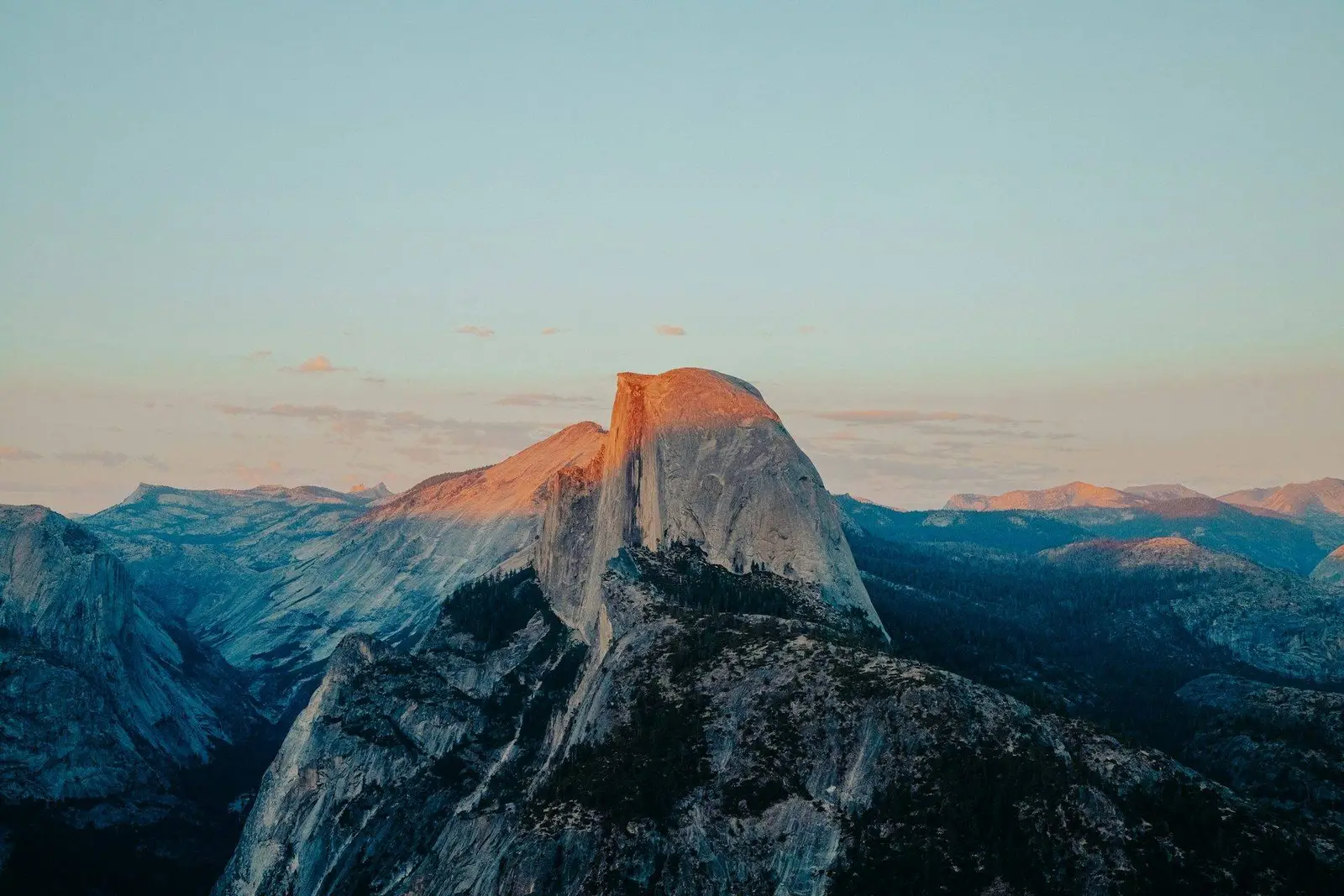
Yosemite's iconic granite cliffs, towering waterfalls, and giant sequoia groves make it one of the most photographed and beloved landscapes on Earth. Rising from the glacier-carved Yosemite Valley, El Capitan's 3,000-foot vertical face draws rock climbers from every continent, while Half Dome's distinctive silhouette has become a symbol of American wilderness. Five separate waterfalls crash into the valley each spring, including Yosemite Falls — the tallest in North America at 2,425 feet. Beyond the valley, the Mariposa Grove shelters over 500 ancient giant sequoias, some exceeding 1,800 years in age, and Glacier Point offers a mile-high panorama of the entire high country. With over 800 miles of trails ranging from flat valley strolls to multi-day backcountry expeditions, Yosemite rewards every level of adventurer.
A mile-deep chasm carved by the Colorado River over millions of years, the Grand Canyon offers breathtaking vistas and world-class hiking and rafting experiences. Stretching 277 miles long and up to 18 miles wide, this UNESCO World Heritage Site exposes nearly 2 billion years of Earth's geological history in its layered walls of red, orange, and buff stone. The South Rim draws 90% of visitors with its accessible viewpoints, historic lodges, and shuttle system. The North Rim, open only May through October, offers a quieter experience at 1,000 feet higher elevation. Below the rim, the Colorado River thunders through rapids rated among the most challenging in the world, making multi-day rafting trips a bucket-list adventure. Whether you view it from the rim, hike to the river, or float through its depths, the Grand Canyon's sheer scale defies comprehension until you stand at its edge.
Known as the Crown of the Continent, Glacier National Park features pristine alpine meadows, rugged peaks, and remnants of the glaciers that carved this dramatic landscape.
Zion's towering sandstone cliffs and narrow slot canyons create some of the most dramatic and sought-after hiking experiences in the national park system. The Virgin River has sculpted Zion Canyon over millions of years, leaving behind 2,000-foot walls of Navajo sandstone painted in red, white, and pink. The Narrows — a 16-mile hike through a slot canyon where the river is the trail — is one of the most iconic hikes in America. Angels Landing, with its chain-assisted scramble along a narrow ridge 1,400 feet above the canyon floor, draws thrill-seekers from around the world. Beyond the main canyon, Kolob Canyons offers a quieter experience with equally stunning scenery. Zion is Utah's most visited national park and the gateway to the Grand Circle of Southwest parks.
America's most visited national park, the Smokies enchant with misty mountain vistas, diverse wildlife, and over 800 miles of hiking trails through ancient forests. Straddling the Tennessee-North Carolina border, the park protects one of the largest blocks of old-growth forest in the eastern United States, with trees up to 500 years old in remote coves. The morning fog that gives the mountains their name drifts through valleys and clings to ridgelines, creating the signature atmospheric views that photographers chase at Clingmans Dome and Newfound Gap. Cades Cove, an 11-mile loop through a broad valley enclosed by mountains, reliably produces black bear, white-tailed deer, and wild turkey sightings from the comfort of your car. With no entrance fee, the most diverse salamander population on Earth, and over 1,500 types of flowering plants, the Smokies deliver extraordinary value and biodiversity in every season.
Dramatic jagged peaks rising straight from valley floors, pristine alpine lakes, and prime wildlife viewing make Grand Teton a photographer's paradise just south of Yellowstone. The Teton Range's cathedral-like granite spires reach 13,770 feet at Grand Teton, with no foothills to soften their dramatic rise from the Jackson Hole valley. Jenny Lake, cradled at the base of the peaks, mirrors the mountains on calm mornings and offers the park's most iconic photographs. The Snake River winds through the valley floor providing world-class fly fishing and float trips with Teton backdrops. Mormon Row's historic barns framed against the mountains have become one of the most photographed scenes in the national park system. Moose, bison, and pronghorn roam the sagebrush flats, while grizzly bears and wolves are increasingly spotted in the northern reaches. Grand Teton pairs perfectly with Yellowstone for a comprehensive Wyoming parks trip.
From temperate rainforests to rugged Pacific coastline to alpine meadows, Olympic National Park encompasses three distinct ecosystems in one stunning preserve. The Hoh Rain Forest receives 140 inches of rain per year, creating a lush canopy of moss-draped Sitka spruce and western hemlock that feels like stepping into a fairy tale. Hurricane Ridge offers alpine scenery with panoramic views of the Olympic Mountains and the Strait of Juan de Fuca — often accessible via a 17-mile drive from Port Angeles. The park's 73 miles of wild Pacific coastline feature sea stacks, tide pools teeming with life, and driftwood-strewn beaches like Ruby Beach and Rialto Beach. Lake Crescent's impossibly clear water draws kayakers and swimmers, while the Sol Duc Falls trail leads through old-growth forest to a three-pronged cascade. Olympic is a UNESCO World Heritage Site and International Biosphere Reserve, protecting one of the most ecologically diverse landscapes in North America.
Towering peaks above 14,000 feet, pristine alpine lakes, and over 350 miles of trails make Rocky Mountain National Park a premier high-altitude adventure destination. Trail Ridge Road, the highest continuous paved road in the US, crests at 12,183 feet above the tree line, delivering sweeping views of the Continental Divide across treeless alpine tundra. The park's elevation range — from 7,500 to 14,259 feet — creates distinct life zones from montane forests to alpine tundra, each with unique wildlife including elk, bighorn sheep, and ptarmigan. Dream Lake and Emerald Lake, accessed from the Bear Lake trailhead, are among the most photographed alpine lakes in America. The park's proximity to Denver (1.5 hours) makes it one of the most accessible wilderness experiences in the national park system.
Where the mountains meet the sea, Acadia offers dramatic coastal scenery, tide pools, and the first sunrise in the United States from Cadillac Mountain. The park's 47,000 acres encompass pink granite cliffs crashing into the Atlantic surf, deep evergreen forests laced with carriage roads built by John D. Rockefeller Jr., and the pristine waters of Jordan Pond and Eagle Lake. Cadillac Mountain, at 1,530 feet, is the first place sunlight touches in the US from October through March — drawing sunrise pilgrims from around the world. Thunder Hole, where waves crash into a narrow coastal crevice, creates a booming splash that can shoot water 40 feet in the air. The carriage roads, 45 miles of car-free crushed-stone paths, are perfect for biking and walking with some of the most beautiful stone bridges in America. Bar Island's sandbar appears at low tide, opening a natural walk to an island that disappears again when the tide returns.
Different parks excel at different things. Find the perfect park for your favorite activity.
Yosemite, Glacier, Zion, Grand Teton, and Olympic offer the best trail systems — from flat valley strolls to multi-day backcountry expeditions.
Read hiking guideYellowstone, Denali, Katmai, Glacier, and the Everglades are the top wildlife destinations — wolves, bears, bison, and alligators.
Read wildlife guideYellowstone, Yosemite, Zion, Acadia, and Great Smoky Mountains offer kid-friendly hikes, Junior Ranger programs, and accessible facilities.
Read family guideYosemite's Tunnel View, Grand Canyon at sunrise, Arches' Delicate Arch at sunset, and Death Valley's sand dunes are photographer favorites.
Read photography guideYellowstone, Yosemite, Glacier, Zion, and Grand Canyon offer iconic campgrounds — from tent-only sites to RV-friendly loops.
Read camping guideNorth Cascades, Great Basin, Isle Royale, and Katmai see fewer than 100,000 visitors per year — perfect for escaping the crowds.
Read solitude guideTiming matters. Find the best parks for spring wildflowers, summer adventures, fall foliage, and winter solitude.
Wildflowers, waterfalls at peak flow, and fewer crowds. Best at Yosemite, Grand Canyon, and Zion.
Full road access, warm weather, and wildflowers at high elevation. Best at Glacier, Yellowstone, and Rocky Mountain.
Cooler temps, fall foliage, and active wildlife. Best at Acadia, Great Smoky Mountains, and Yellowstone.
Snowshoeing, cross-country skiing, and desert hiking. Best at Death Valley, Big Bend, and Bryce Canyon.
Our highest-rated parks across America, chosen for scenery, accessibility, and unforgettable experiences.


Fresh guides, seasonal tips, and insider advice for planning your next national park trip.

Discover the best national parks to visit in December, from Yellowstone's snowy geysers to Death Valley's perfect hiking weather. Winter activities, holiday trips, and crowd-free trails await.

Discover the 10 best national parks within a day's drive of Phoenix, Arizona. Driving times, top hikes, and weekend trip ideas for the Grand Canyon, Saguaro, Joshua Tree, and beyond.
Discover the best national parks to visit in November, from Death Valley's perfect hiking weather to Zion's quiet trails. Cooler temps, minimal crowds, and desert prime season.
Common questions about visiting America's national parks.
The best national parks depend on your interests, but the top-rated parks overall are Yellowstone, Yosemite, Grand Canyon, Zion, Glacier, and Grand Teton. For first-time visitors, Yellowstone, Yosemite, and the Grand Canyon are the best choices — they combine iconic scenery, well-developed infrastructure, and accessible hiking.
There are 63 officially designated national parks in the United States, spread across 30 states and U.S. territories. The National Park Service also manages more than 400 other units including national monuments, seashores, and recreation areas.
Great Smoky Mountains National Park is the most-visited, with 12–14 million visitors per year, followed by Grand Canyon (6+ million), Zion (4.5+ million), and Rocky Mountain (4+ million). The least-visited is Gates of the Arctic in Alaska with fewer than 10,000 visitors per year.
Most national parks charge $20–$35 per vehicle for a 7-day pass. The $80 America the Beautiful annual pass covers every national park for 12 months and pays for itself on the second visit. Seniors (62+) can buy a $20 lifetime pass, and military members and 4th graders get free passes.
Summer (June–August) offers full road access and the best weather at most parks, but also brings the largest crowds. Shoulder seasons — spring (April–May) and fall (September–October) — offer fewer crowds, cooler temperatures, and unique wildlife or foliage opportunities. Winter is ideal for parks like Death Valley and Big Bend.
Most national parks do not require entry reservations. As of 2026, only a few parks have peak-hours reservation requirements: Glacier, Yosemite, Arches, and Haleakalā. Permits for backcountry camping and specific activities like Half Dome or Angels Landing are separate from entry reservations.
We combine first-hand experience with thorough research to bring you the most reliable national park guides.
Every park guide is built from dozens of sources — NPS data, visitor reviews, local tips, and seasonal insights — so you get the full picture.
Our transparent scoring system rates scenery, accessibility, crowd levels, and more. No pay-for-placement, no bias — just honest rankings.
From best-time-to-visit guides to gear recommendations, we give you everything you need to hit the trail with confidence.
Dive into our complete national park rankings, find the perfect park for your next trip, and get insider tips to make every visit unforgettable.